Home / Engagement / Keynotes, talks and public voice
Research · No. 171 · November 2026
Design probes: giving children a voice in disaster preparedness
A novel design-led method in Design Studies, one of the leading international journals of design research

Research · November 2026
This exciting and highly original work is now published in Design Studies, one of the world’s leading journals of design research.
- Role
- Co-author
- Where
- Aotearoa New Zealand
- With
- M. Mosavat, A. Ghaffarianhoseini, A. GhaffarianHoseini, L. Le De
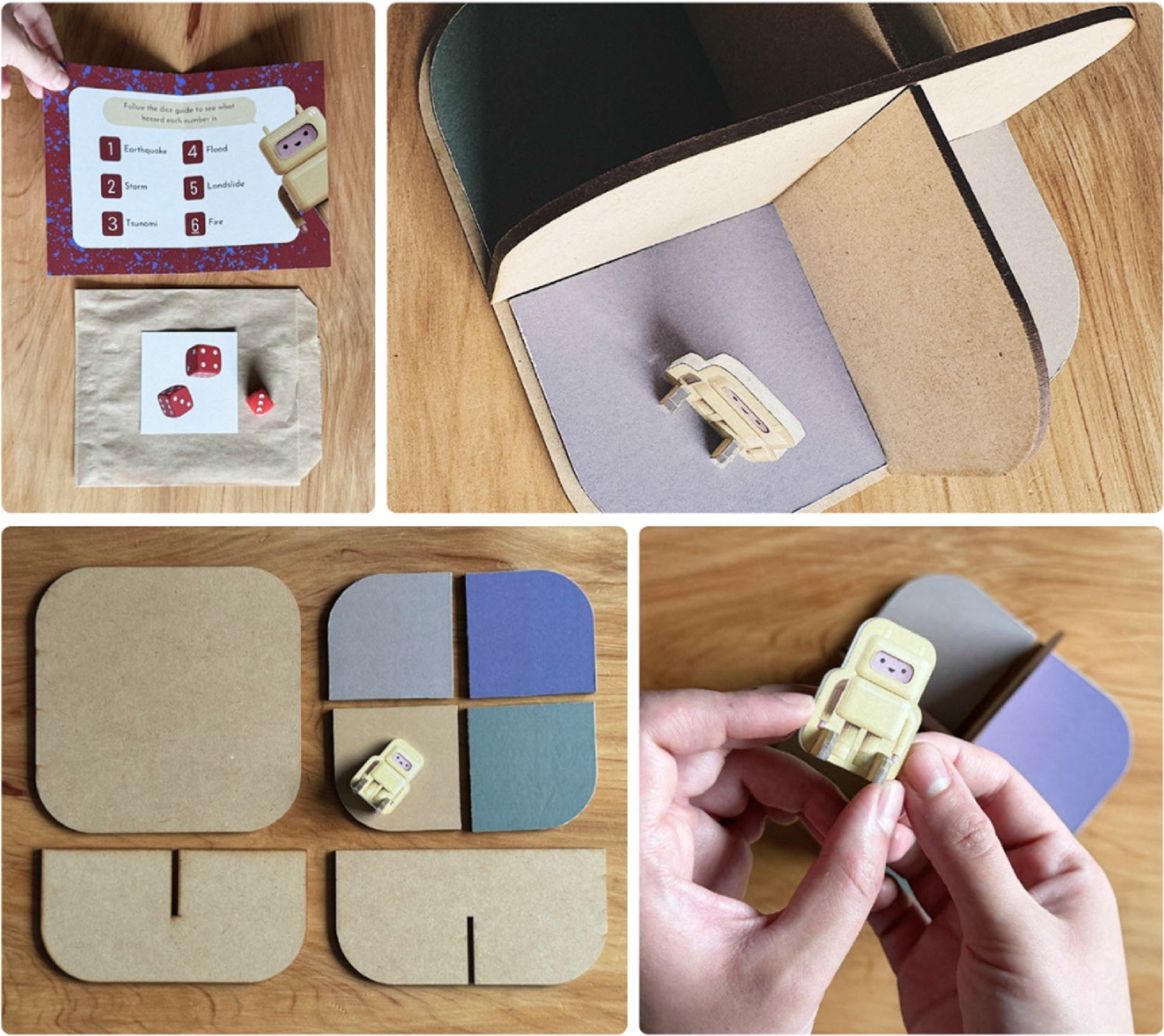
In the photograph · ‘Kit’, the character at the centre of the children’s design probe kit (Figure 2). From Mosavat et al. (2026), Design Studies 107, 101434, CC BY 4.0.
- Role
- Co-author
- Location
- Aotearoa New Zealand
- Host
- Design Studies (Elsevier), Volume 107
- Journal
- Design Studies (Elsevier), Volume 107, December 2026, article 101434
- Authors
- M. Mosavat, A. Ghaffarianhoseini, A. GhaffarianHoseini, L. Le De
- Access
- Open access, CC BY 4.0
- Participants
- 20 children aged 9 to 12, over four weeks
Now published in Design Studies
This exciting and highly original work is now published in Design Studies, one of the world’s leading journals of design research. Co-authored by Professor Amir, it introduces a novel way of working with children: purpose-designed ‘design probes’ that let them take an active part in preparing their families and communities for disasters.
Read the paper in Design Studies (open access) ↗
A new way to involve children
Disaster risk reduction usually treats children as people to be protected and taught, not as contributors. This study, co-authored by Professor Amir and published in Design Studies, tests a different approach: design probes, carefully designed kits of playful and reflective tasks that invite children to think, make and talk about disasters in their own way.
Meet Kit
The research team co-designed and refined a probe kit, named ‘Kit’, with children aged 9 to 12 in Aotearoa New Zealand. Over four weeks, 20 children worked through four activities: a planning diary and flowchart, a detective role-play, a board game and a time capsule, with interviews before and after.
What changed
The probes moved children from passive learners to reflective, proactive participants. They sparked conversations at home, led to early household preparedness actions, and helped children build a broader, equity-minded understanding of who is most vulnerable in a disaster.
Why it matters
The paper offers a tested, transferable method, with an activity structure and facilitation guidance that others can use, bridging child-centred design research and disaster resilience across different hazards and settings.
Photographs
- Original ↗
- Original ↗


