Architectural research helping inform policy, guidance and decisions about buildings and cities.
Beyond citation counts
Research that helps shape decisions
These examples trace how work coauthored by Professor Amir Ghaffarianhoseini has helped inform policy discussions, climate assessments, professional guidance, industry methods and education around the world. They show research moving into the resources people use to make decisions about buildings, cities and the environment.
This is the value of real-world research impact beyond citation counts: knowledge being interpreted, adapted and used. The connections include research factors used in industry surveys, technical explanations adapted into guidance, evidence informing recommendations and expertise contributed directly to national science advice.
Each example identifies the specific contribution and links to the original evidence. Supporting references and curated resources are labelled separately, so readers can distinguish them from documented methodological use, technical adaptation and guidance contributions.
Evidence across borders
A global footprint. Explore the connections.
Select a place or region to discover the reports, guidance and professional resources connected to the research.
Research in practice / World
Points identify source or application contexts. Global reports are listed separately; a point does not imply national policy adoption.
Browse 48 examples
Explore the original evidence
GlobalIPCCAssessment evidencePassive-building research in the IPCC climate assessment
Source guideClimate Change 2022: Mitigation of Climate ChangeIntergovernmental Panel on Climate Change · Working Group III2022
Original source guide · report linked below
Assessment evidence
Intergovernmental Panel on Climate Change · Working Group III
Climate Change 2022: Mitigation of Climate ChangeInternational climate assessment · 2022 · Buildings Supplementary Material · Table 9.SM.6
Co-authored passive-wall research contributes to the IPCC’s assessment of the feasibility of building-envelope improvements.
International · Toronto case study, CanadaEuropean Observatory · WHOPolicy evidenceUrban-heat research informing health-system climate action
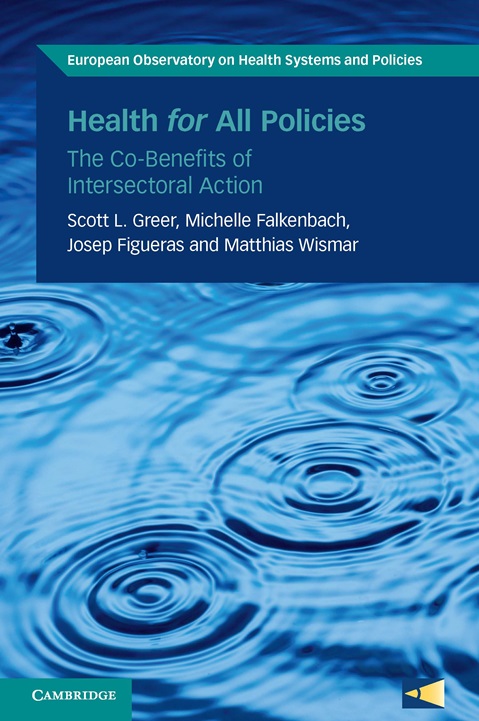
Cover: World Health Organization / European Observatory on Health Systems and Policies (2024). Greer, Falkenbach, Figueras and Wismar (eds.), Health for All Policies. Cambridge University Press. CC BY-NC-ND 4.0. Reuse terms
Policy evidence
European Observatory on Health Systems and Policies · hosted by WHO
Health for All Policies: The Co-Benefits of Intersectoral ActionHealth-policy study · 2024 · Chapter 12 · SDG13 climate action
The study uses co-authored urban-heat research to discuss green buildings and tree cover in heat-wave resilience.
International · Central Europe & PakistanWorld BankDevelopment guidanceUrban-climate research in international development guidance
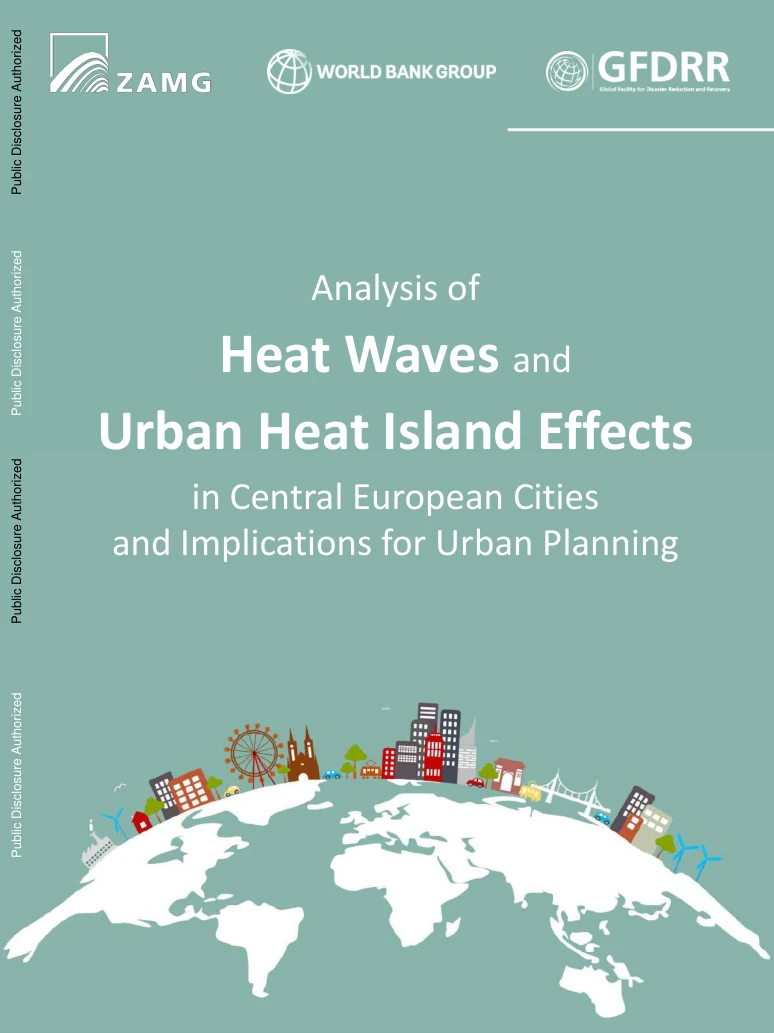
Cover: World Bank (2020). Reproduced unchanged at thumbnail size. Reuse terms
Development guidance
World Bank
Analysis of Heat Waves and Urban Heat Island Effects in Central European Cities and Implications for Urban PlanningDevelopment reports · 2020–2021 · Also: Climate Modeling for Macroeconomic Policy: A Case Study for Pakistan (2021)
Two reports draw on co-authored studies when discussing vegetation-based cooling and heat-adaptation options.
Source guideBackground report for the revision of EU Green Public Procurement criteria for BuildingsEuropean Commission · Joint Research Centre2019 & 2024
Original source guide · report linked below
Technical guidance
European Commission · Joint Research Centre
Background report for the revision of EU Green Public Procurement criteria for BuildingsTechnical background reports · 2019 & 2024 · JRC138891 · JRC116121
The JRC report repeatedly uses the co-authored review to explain roof systems, planting choices and environmental benefits.
New ZealandNew Zealand · PMCSAReference-group contributionContributing expertise to national science advice
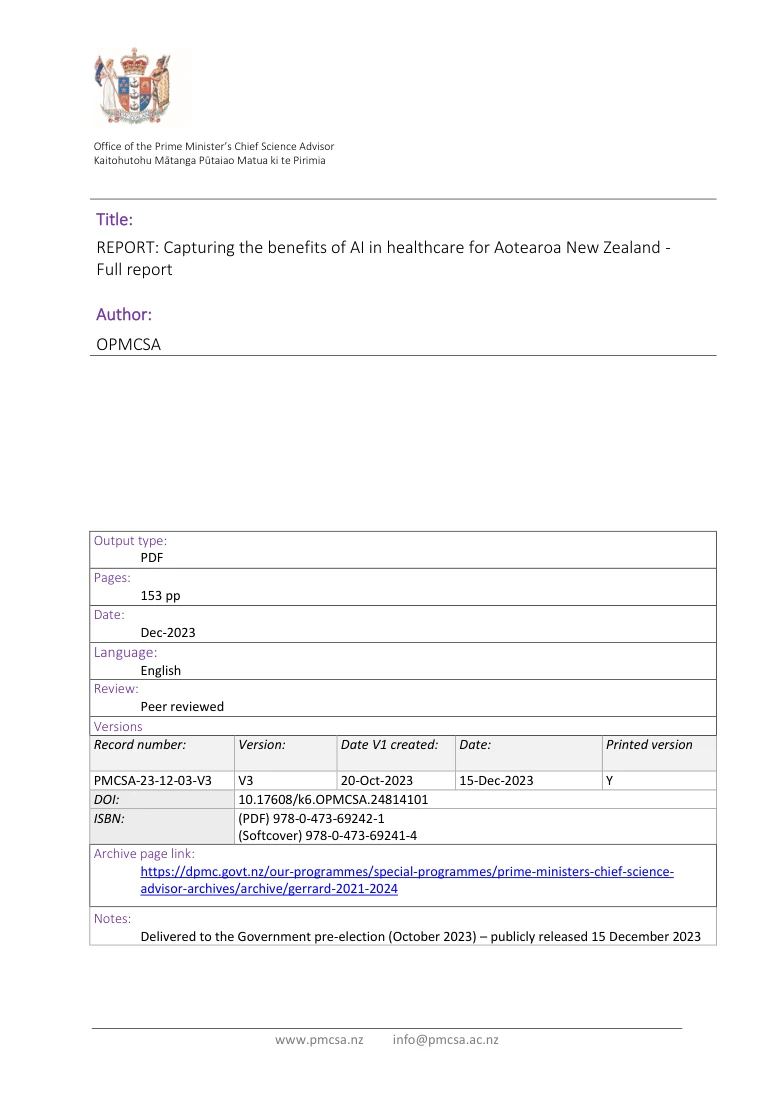
Archive title sheet: Office of the Prime Minister’s Chief Science Advisor (2023). Reuse terms
Reference-group contribution
Office of the Prime Minister’s Chief Science Advisor
Capturing the benefits of AI in healthcare for Aotearoa New ZealandNational science-advice report · 2023 · Reference-group contribution · Printed page iv
Professor Amir is acknowledged in the report’s reference group, contributing to the wider consultation on AI in healthcare.
United StatesNRELTechnical research evidenceSmart-home research in national-laboratory evaluation
Source guideLaboratory Resources and Techniques to Evaluate Smart Home Technology: PreprintNational Renewable Energy Laboratory2018
Original source guide · report linked below
Technical research evidence
National Renewable Energy Laboratory
Laboratory Resources and Techniques to Evaluate Smart Home Technology: PreprintNational-laboratory technical conference paper · 2018 ·
A report from the US energy laboratory cites Professor Amir’s lead-authored smart-house review in its discussion of laboratory homes and technology evaluation.
Canada · QuébecQuébec · INSPQPublic-health guidanceUrban-climate research in public-health guidance
Source guideUrban Heat Island Mitigation Strategies: 2021 UpdateQuébec public-health institute · INSPQ2021 / 2023
Original source guide · report linked below
Public-health guidance
Québec public-health institute · INSPQ
Urban Heat Island Mitigation Strategies: 2021 UpdatePublic-health guidance · 2021 / 2023 · English edition · Institut national de santé publique du Québec
The institute uses the co-authored comparative review to discuss urban greening, materials and city temperatures.
New ZealandBRANZ · WSPResearch-priority assessmentBuilding-performance research in adaptation priorities
Cover: BRANZ (2024), ER89; report by Nick Locke and Leoni McKelvey, WSP NZ Ltd. Reuse terms
Research-priority assessment
BRANZ · WSP
Climate change adaptation of buildings in New Zealand – research prioritisation assessmentBuilding-adaptation research report · 2024 · BRANZ External Research Report ER89 · WSP
A WSP report for BRANZ discusses research co-authored by Professor Amir, Zahra Jalali and Asaad Shamseldin when assessing building-adaptation research needs.
GermanyDDV · DLRApplied project evidenceGreen-roof research in municipal planning evidence
Source guideFernerkundliche Identifizierung von Vegetationsflächen auf Dächern zur Entwicklung des für die Bereiche des Stadtklimas, der Stadtentwässerung und des Artenschutzes aktivierbaren Flächenpotenzials in den StädtenDDV · DLR2015
Original source guide · report linked below
Applied project evidence
DDV · DLR
Fernerkundliche Identifizierung von Vegetationsflächen auf Dächern zur Entwicklung des für die Bereiche des Stadtklimas, der Stadtentwässerung und des Artenschutzes aktivierbaren Flächenpotenzials in den StädtenDBU-funded development report · 2015 ·
A DDV/DLR report uses the co-authored review to explain ecosystem services within a practical green-roof inventory and potential-assessment project.
Wellington · New ZealandWellington district-plan hearingsSubmitted planning evidenceUrban-climate research reaching Wellington’s planning hearings
Source guideMultiple Roles of Green Space in the Resilience, Sustainability and Equity of Aotearoa New Zealand’s CitiesWellington City Council · Proposed District Plan, Hearing Stream 112024
Original source guide · report linked below
Submitted planning evidence
Wellington City Council · Proposed District Plan, Hearing Stream 11
Multiple Roles of Green Space in the Resilience, Sustainability and Equity of Aotearoa New Zealand’s CitiesSubmitted planning evidence · 2024 · Hearing Stream 11 · submitted by Dr Paul Blaschke
A green-space review submitted to the hearings draws on co-authored urban-climate research in its discussion of urban heat and green infrastructure.
Source guideMalaysia Building Information Modelling Report 2019Construction Industry Development Board Malaysia · CREAM2020
Original source guide · report linked below
Survey-method use
Construction Industry Development Board Malaysia · CREAM
Malaysia Building Information Modelling Report 2019National industry report · 2020 · Printed pages 18 and 42; full reference page 44
Research coauthored by Professor Amir informed the BIM-readiness factors used in CIDB Malaysia’s national industry survey. The report explicitly connects factors from the team’s SME execution-framework paper to questions about organisational readiness.
The paper is coauthored with Ali GhaffarianHoseini and colleagues. This documents use of research factors, rather than authorship of the entire survey or a measured effect on national uptake.
New ZealandBRANZ · ER73Survey-method useBIM research informing an automated-compliance roadmap
Source guideRoadmap for Automated Compliance Checking Adoption in New Zealand Offsite Manufacturing IndustryBRANZ · University of Auckland · Building Research Levy2022
Original source guide · report linked below
Survey-method use
BRANZ · University of Auckland · Building Research Levy
Roadmap for Automated Compliance Checking Adoption in New Zealand Offsite Manufacturing IndustryLevy-funded industry roadmap · 2022 · Printed page 10; bibliography page 32 · ER73 / LR12046
Research coauthored by Professor Amir helped inform industry-survey response options in BRANZ’s roadmap for automated compliance checking in New Zealand offsite manufacturing. The methodology explicitly identifies the team’s BIM review among the sources used to construct questions about adoption barriers.
The review is one of several methodological sources. The roadmap is authored by Yang Zou, Brian Guo, Johannes Dimyadi and Eleni Papadonikolaki.
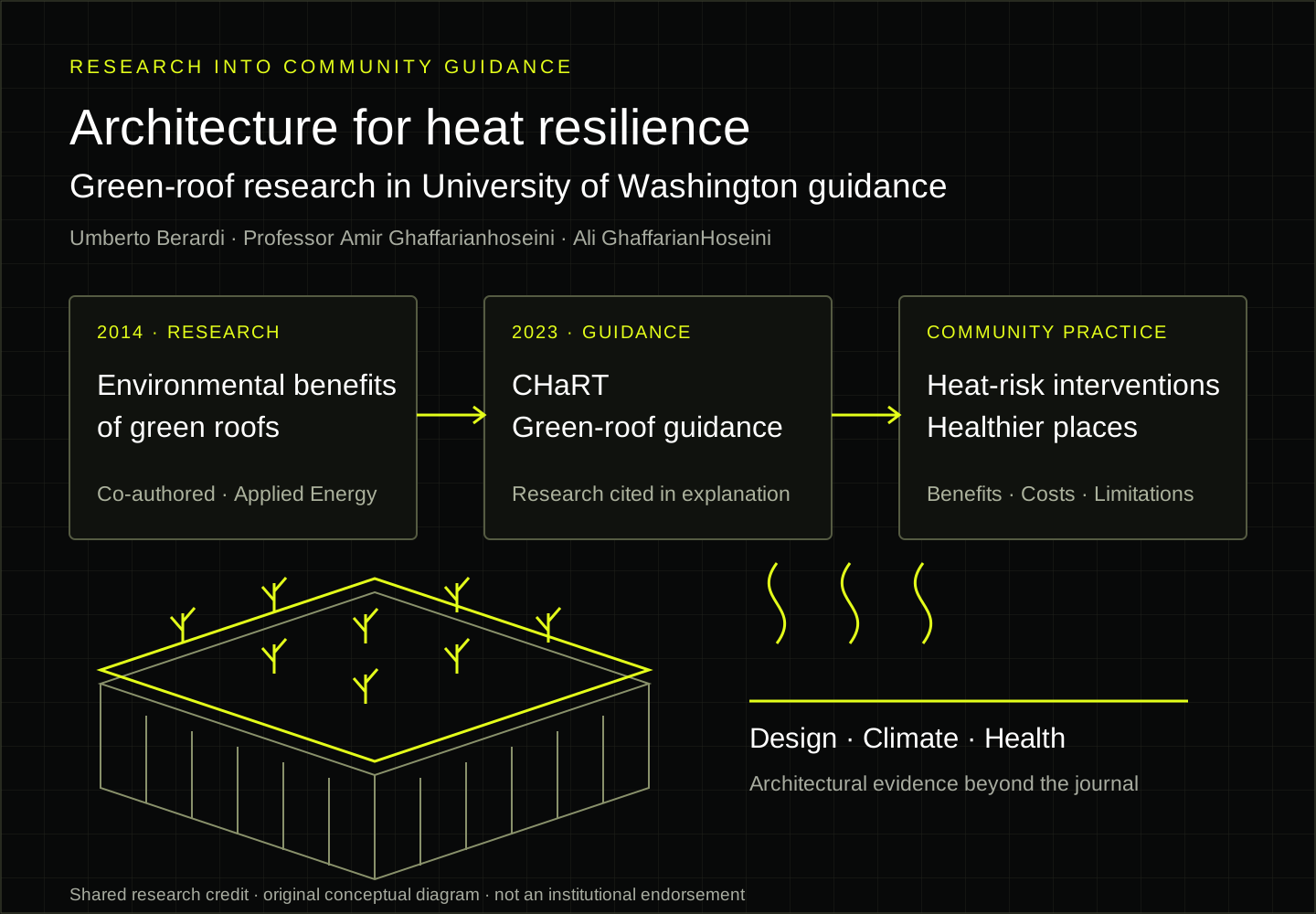
Germany’s Climate Service Center drew on the green-roof review coauthored by Umberto Berardi, Professor Amir and Ali GhaffarianHoseini in its guidance for planners and municipalities. Figure 6 explicitly adapts the review’s explanation of green-roof heat transfer.
The report also draws on the review when explaining roof types, thermal performance and environmental benefits. This is documented technical translation into guidance.
Source guideYapı Bilgi Modellemesi Uygulaması — Akıllı Şehir Uygulama Rehberlik KılavuzuMinistry of Environment, Urbanisation and Climate Change · Directorate General GIS2024
Original source guide · report linked below
Implementation-guidance evidence
Ministry of Environment, Urbanisation and Climate Change · Directorate General GIS
Yapı Bilgi Modellemesi Uygulaması — Akıllı Şehir Uygulama Rehberlik KılavuzuGovernment implementation guide · 2024 · Section 2.2, Proje Gerekçesi · References 26 and 42
Türkiye’s smart-city implementation guide cites research coauthored by Professor Amir within its rationale for BIM-enabled planning, information integration and sustainable building delivery. Both the BIM-uptake review and the Green Star/BIM adoption study appear in the guide’s evidence base.
This establishes research use in official implementation guidance, rather than authorship of the guide or demonstrated effects on a completed building.
JapanJapan · PatentPatent-description citationHealthy-building research reaching a Japanese patent
Source guideDepression and/or anxiety biomarkers in mice · JP7301327B2Kyoto Sangyo University · Patent JP7301327B22023
Original source guide · report linked below
Patent-description citation
Kyoto Sangyo University · Patent JP7301327B2
Depression and/or anxiety biomarkers in mice · JP7301327B2Granted patent · 2023 · Granted 3 July 2023 · Paragraphs 0026, 0045 and bibliography 0050
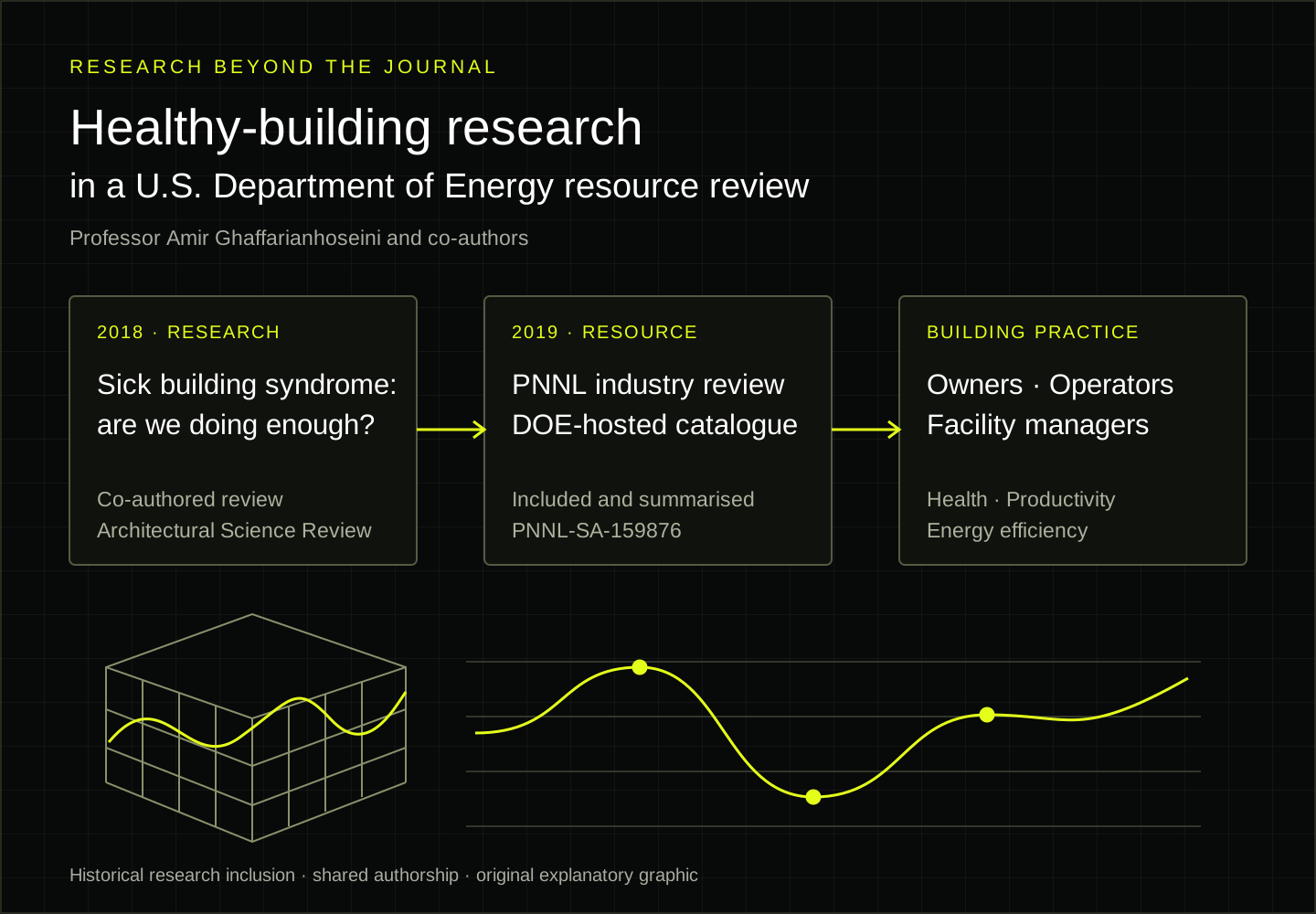
Professor Amir’s first-authored sick-building syndrome review is cited in the technical description of a granted Japanese patent concerning mouse depression and anxiety biomarkers. The review appears in the indoor-environment discussion that precedes the experimental rationale.
The inventors are Keiko Kato and Akiko Fujita. This is a research citation in the patent description; it does not establish Amir’s inventorship, patent ownership, clinical validation or commercial deployment.
United StatesSageGlassCommercial evidence communicationFaçade research reaching commercial building decisions
Source guideAn appealing alternative to double-skin façadesSageGlass · Commercial smart-glazing manufacturer2021
Original source guide · report linked below
Commercial evidence communication
SageGlass · Commercial smart-glazing manufacturer
An appealing alternative to double-skin façadesCommercial industry guidance · 2021 · 9 August 2021 · Illustration credit and reference 10
SageGlass draws on research coauthored by Professor Amir in its practitioner-facing comparison of double-skin façades and smart glazing. The article expressly credits a façade illustration to the team’s review and cites the study in discussion of performance and dynamic sunlight and heat management.
This documents commercial communication of the research. It does not imply that Amir developed or endorses the product, or that the review validates the manufacturer’s performance claims.
GermanyGermany · UBA DASIFIndicator-rationale evidenceGreen-roof evidence in climate-adaptation monitoring
Source guideOperationalisierung von DAS-Indikatoren mit Fernerkundungsdaten — DASIFGerman Environment Agency · Umweltbundesamt2024
Original source guide · report linked below
Indicator-rationale evidence
German Environment Agency · Umweltbundesamt
Operationalisierung von DAS-Indikatoren mit Fernerkundungsdaten — DASIFGovernment adaptation-monitoring research · 2024 · CLIMATE CHANGE 50/2024 · Printed page 34; reference page 105
Germany’s Environment Agency cites the team’s green-roof review when establishing the rationale for green roofs as a metropolitan climate-adaptation response. The DASIF report develops remote-sensing approaches for adaptation monitoring, including green roofs in major cities.
The review supports the indicator’s conceptual rationale. The remote-sensing algorithms and operational monitoring methods are the work of the report’s authors.
United KingdomNatural Resources WalesAction-recommendation evidenceGreen-roof research supporting an air-quality action opportunity
Source guideSoNaRR2020 — Air QualityNatural Resources Wales2021
Original source guide · report linked below
Action-recommendation evidence
Natural Resources Wales
SoNaRR2020 — Air QualityNational natural-resources assessment · 2021 · Section 7, printed page 24; bibliography page 28 · Wales
Natural Resources Wales cites the team’s green-roof review beside an explicit opportunity to expand green infrastructure and vegetation for air-quality exposure reduction. The connection appears in the action section of its national natural-resources assessment.
The Air Quality report’s recommended citation year is 2021, within the SoNaRR2020 series. This is assessment guidance, rather than proof that a specific scheme was implemented.
ChinaChina · CCICEDPolicy-study evidenceIoT research informing digital-green urban transformation
Source guideDigitalization and Green Technologies for Sustainable DevelopmentChina Council for International Cooperation on Environment and Development2024
Original source guide · report linked below
Policy-study evidence
China Council for International Cooperation on Environment and Development
Digitalization and Green Technologies for Sustainable DevelopmentInternational policy study · 2024 · Building improvement discussion; reference 44 · September 2024
A review coauthored by Professor Amir is cited in CCICED’s 2024 policy study on digital and green urban transformation. It forms part of the evidence accompanying discussion of smart-home technologies, IoT and building-energy improvements.
This establishes inclusion in the policy study’s evidence base. It does not establish that its recommendations were adopted or that the paper caused measured energy savings.
Source guideİstanbul Yeşil Alanlar Çalıştayı — Bildiri KitabıIstanbul Metropolitan Municipality · Ağaç ve Peyzaj AŞ2020
Original source guide · report linked below
Attributed policy-table adaptation
Istanbul Metropolitan Municipality · Ağaç ve Peyzaj AŞ
İstanbul Yeşil Alanlar Çalıştayı — Bildiri KitabıMunicipal workshop proceedings · 2020 · Workshop 5–6 February 2020 · Printed pages 539–540; reference page 543
A contribution to Istanbul Metropolitan Municipality’s Green Areas Workshop draws on the team’s green-roof review to compare international incentive policies. Its policy table is explicitly compiled from the coauthored research before discussing options relevant to Türkiye.
The chapter is by Ülger Bulut Karaca and Senem Asrak. The table’s research derivation is documented; municipal adoption of those incentives is not established.
AustraliaCLOCS-AGuidance evidence reviewConstruction-logistics research in Australian guidance
Source guideCLOCS-A Standard — Logistics and Planning GuidanceConstruction Logistics and Community Safety — Australia2023 asset
Original source guide · report linked below
Guidance evidence review
Construction Logistics and Community Safety — Australia
CLOCS-A Standard — Logistics and Planning GuidanceProfessional planning guidance · 2023 asset · Literature review reference 29; work-area mapping in Table 1
Professor Amir’s coauthored construction-consolidation research is summarised in CLOCS-A’s published logistics and planning guidance. The source maps the study to the evidence supporting preparation of a Construction Logistics Plan.
Part B is labelled Draft 1 for discussion and retains drafting notes. Describe this as evidence-review inclusion, rather than a mandatory national requirement derived from the research.
Shanghai’s science and technology intelligence platform cites a CIM review coauthored by Professor Amir in its Chinese-language briefing on urban digital transformation. The briefing presents the review’s application domains, from urban energy and infrastructure to microclimate and digital twins.
This is professional knowledge dissemination. The briefing’s references to Chinese pilot cities do not establish that those pilots implemented the team’s research.
Source guideGreen Roof Options for Campus BuildingsQueen’s University · Physical Plant Services · Greengenuity capstone team2021
Original source guide · report linked below
Design-report technical use
Queen’s University · Physical Plant Services · Greengenuity capstone team
Green Roof Options for Campus BuildingsClient-facing student design report · 2021 · 26 March 2021 · Section 4.4.1, printed page 44; reference page 57
A design report prepared for Queen’s University’s campus facilities team uses the coauthored green-roof review to explain thermal parameters and the relationship between existing roof insulation and green-roof performance. The report proposes a campus implementation and maintenance resource.
This is a client-facing final-year student project. The report requires professional review before construction use; final adoption into campus requirements has not been established.
United StatesNew York · The Nature ConservancyApplied-research evidenceGreen-roof research in New York’s urban mapping evidence
Source guideExamining the distribution of green roofs in New York City through a lens of social, ecological, and technological filtersThe Nature Conservancy-led research team2022
Original source guide · report linked below
Applied-research evidence
The Nature Conservancy-led research team
Examining the distribution of green roofs in New York City through a lens of social, ecological, and technological filtersApplied mapping study · 2022 · Ecology and Society 27(3):20 · Introduction and reference list
A Nature Conservancy-led study mapping New York City’s green roofs cites research coauthored by Professor Amir when explaining how roof design and location affect benefits. The project released an open dataset to support further research and urban green-infrastructure planning.
The cited review supports the study’s framing. The mapping and dataset are the work of its authors; this does not establish causal influence on New York City policy.
Germany’s Environment Agency cites the team’s green-roof review in its assessment of biodiversity and rooftop urban-gardening benefits within local wastewater and rainwater management. The research contributes to the report’s discussion of neighbourhood-scale co-benefits.
The connection concerns assessment evidence; authorship of the report’s legal recommendations is not implied.
United KingdomUK · DEFRA / AQEGQualified evidence synthesisGreen-roof research in government air-quality synthesis
Source guideEffects of vegetation on urban air pollutionUK Department for Environment, Food & Rural Affairs · Air Quality Expert Group2018
Original source guide · report linked below
Qualified evidence synthesis
UK Department for Environment, Food & Rural Affairs · Air Quality Expert Group
Effects of vegetation on urban air pollutionGovernment evidence review · 2018 · Section 4.1, printed page 15; reference page 31
The UK Air Quality Expert Group includes the coauthored green-roof review among the contextual reviews discussed in its assessment of vegetation and urban air pollution. The report brings research evidence and its limitations into a policy-facing synthesis.
The report explicitly notes limitations in quantifying policy-scale pollutant-concentration reductions. This case preserves that qualification rather than presenting a measured air-quality effect.
NorwayNorway · VANNPractitioner evidenceGreen-roof evidence in inspection and maintenance discussion
Source guideFrom Inspection to Maintenance: A Visual Guide for Assessing Green Roof ConditionsNorwegian Water Association · VANN2025
Original source guide · report linked below
Practitioner evidence
Norwegian Water Association · VANN
From Inspection to Maintenance: A Visual Guide for Assessing Green Roof ConditionsPractice-facing technical article · 2025 · VANN 03/2025 · Background page 242; reference page 247
A Norwegian practice-facing article on green-roof inspection and maintenance cites the coauthored review when explaining environmental benefits. Its applied study examines roofs in Trondheim and connects research with maintenance considerations.
The review supports the background discussion. The inspection checklist and study methods derive from other research and standards.
TürkiyeYAPI DergisiProfessional knowledge transferGreen-roof knowledge reaching architectural practice
Source guideÇatı ve Cephe Bahçelerinin Yapıya ve Çevreye EtkileriYAPI Dergisi · Gülru Koca
Original source guide · report linked below
Professional knowledge transfer
YAPI Dergisi · Gülru Koca
Çatı ve Cephe Bahçelerinin Yapıya ve Çevreye EtkileriProfessional architecture article · Reference 1 and performance discussions · Publication date not stated
Türkiye’s YAPI architecture magazine uses the team’s green-roof review to explain implications for energy, urban heat, stormwater, acoustics and biodiversity. Repeated in-text citations connect the research with practical questions for building design.
This is professional dissemination, rather than evidence of policy adoption. The inspected online article does not state a publication date.
SingaporeSingapore · BCASupporting evidence · Report referenceGreen-rating research in Singapore’s independent review
Source guideIndependent Review of BCA Green Mark SchemesBuilding and Construction Authority · Independent consultancy team2019 study
Original source guide · report linked below
Report reference
Building and Construction Authority · Independent consultancy team
Independent Review of BCA Green Mark SchemesCommissioned professional review · 2019 study · References, printed page 10
Professor Amir’s coauthored comparison of green-building rating systems is cited in the independent professional review of Singapore’s BCA Green Mark schemes. The commissioned study examines robustness, benchmarking and lifecycle costs.
The verified connection is inclusion in the report’s references. It does not establish that the paper changed Green Mark criteria or produced the study’s cost-saving results.
GlobalGBPNSupporting evidence · Curated evidence appraisalGreen-rating research translated for policy audiences
Source guideA critical comparison of green building rating systems — policy evidence libraryGlobal Buildings Performance Network2017
Original source guide · report linked below
Curated evidence appraisal
Global Buildings Performance Network
A critical comparison of green building rating systems — policy evidence libraryCurated policy evidence library · 2017 · Resource appraisal · Methods, conclusions and limitations
The Global Buildings Performance Network’s evidence library profiles the rating-systems paper coauthored by Professor Amir. Its detailed appraisal summarises the study’s methods, findings, limitations and implications for sustainability assessment.
This is curated policy and practitioner dissemination. The library’s Policy Quality field is not a personal award, ranking or demonstrated policy adoption.
GlobalIEA EBC · Annex 57Supporting evidence · Evidence-corpus inclusionSustainable-building research in an international energy synthesis
Source guideEvaluation of Embodied Energy and CO₂eq for Building Construction — Subtask 2: A Literature ReviewInternational Energy Agency · Energy in Buildings and Communities2016
Original source guide · report linked below
Evidence-corpus inclusion
International Energy Agency · Energy in Buildings and Communities
Evaluation of Embodied Energy and CO₂eq for Building Construction — Subtask 2: A Literature ReviewInternational technical synthesis · 2016 · August 2016 · Reference 199, printed page 51
Professor Amir’s sustainable-energy review appears in the study corpus of IEA EBC Annex 57’s international literature synthesis. The report reviews methods and emerging research to support embodied-energy and carbon-assessment guidance.
The exact paper is included in the evidence corpus. An individual guideline requirement derived from this paper has not been established.
BrazilUniversity of São PauloCurricular inclusionSustainable-energy research in engineering education
Source guidePCC3533 — Building Thermal and Daylight Performance SimulationUniversity of São Paulo · Escola Politécnica2025 syllabus
Original source guide · report linked below
Curricular inclusion
University of São Paulo · Escola Politécnica
PCC3533 — Building Thermal and Daylight Performance SimulationOfficial engineering syllabus · 2025 syllabus · PCC3533 · Official syllabus activated 1 January 2025
The University of São Paulo’s practical course on building thermal and daylight simulation includes Professor Amir’s coauthored sustainable-energy review in its official bibliography. The course connects simulation, indoor environmental quality and passive-design projects.
This documents curricular inclusion, rather than use by every student or a professional accreditation decision.
DenmarkUIA · Architecture & SDGsProfessional reference resourceWastewater research in sustainable architecture guidance
Source guideAn Architecture Guide to the UN 17 Sustainable Development GoalsUIA Commission on UN SDGs · Danish architecture partners2018–2019 editions
Original source guide · report linked below
Professional reference resource
UIA Commission on UN SDGs · Danish architecture partners
An Architecture Guide to the UN 17 Sustainable Development GoalsProfessional architecture guide · 2018–2019 editions · Japanese edition · SDG 6 source list, printed page 135
Research coauthored by Professor Amir is included among the SDG 6 sources in the UIA-partnered architecture guide. The Japanese edition connects the wastewater-treatment review with professional discussion of clean water, sanitation and sustainable design.
Translated editions are one source family. The reference does not establish that any illustrated project used the paper. Denmark identifies the guide’s architecture partners; the source has international reach.
AustraliaClimateworks · CEFCSupporting evidence · Report referenceConstruction-transport research in freight decarbonisation evidence
Source guideDelivering freight decarbonisation: Strategies for reducing Australia’s transport emissionsClimateworks Centre · CEFC-hosted report2023
Original source guide · report linked below
Report reference
Climateworks Centre · CEFC-hosted report
Delivering freight decarbonisation: Strategies for reducing Australia’s transport emissionsNational freight strategy report · 2023 · Bibliography, printed page 36
Professor Amir’s coauthored construction-transport research is cited in Climateworks Centre’s report on reducing Australia’s freight emissions. The source connects the team’s New Zealand research framework with a wider national transport-decarbonisation evidence base.
The verified connection is the exact bibliography entry. A specific recommendation derived from the paper has not been traced.
MexicoMexico · INAHSupporting evidence · Professional-publication referenceHealthy-building research in cultural-heritage workplaces
Source guideRiesgos latentes para la salud dentro de los repositorios y acervos del patrimonio cultural del INAHInstituto Nacional de Antropología e Historia · Conservation publication2021 online
Original source guide · report linked below
Professional-publication reference
Instituto Nacional de Antropología e Historia · Conservation publication
Riesgos latentes para la salud dentro de los repositorios y acervos del patrimonio cultural del INAHProfessional conservation publication · 2021 online · Published online 8 July 2021 · Special issue labelled 2020 · Reference 8
An INAH conservation publication in Mexico cites Professor Amir’s coauthored sick-building syndrome review in its discussion of health risks inside cultural-heritage repositories. It connects built-environment research with a specialist conservation audience.
The article record and full scholarly reference are verified. A specific operational recommendation derived from the paper has not been established.
South AfricaSouth Africa · SAICESupporting evidence · Technical-publication evidenceBIM research in South African industry discussion
Source guideA proposal to facilitate BIM implementation across the South African construction industryJournal of the South African Institution of Civil Engineering2022
Original source guide · report linked below
Technical-publication evidence
Journal of the South African Institution of Civil Engineering
A proposal to facilitate BIM implementation across the South African construction industryIndustry-oriented technical paper · 2022 · Volume 64(4), pages 29–37 · Citation page 30; bibliography page 37
A South African civil-engineering technical paper cites research coauthored by Professor Amir when explaining how BIM can reduce design clashes and rework. The paper proposes an industry implementation approach informed by expert interviews.
This is an industry-oriented research proposal, rather than adopted national policy. The paper does not attribute its interview methodology or local challenge categories to Amir’s review.